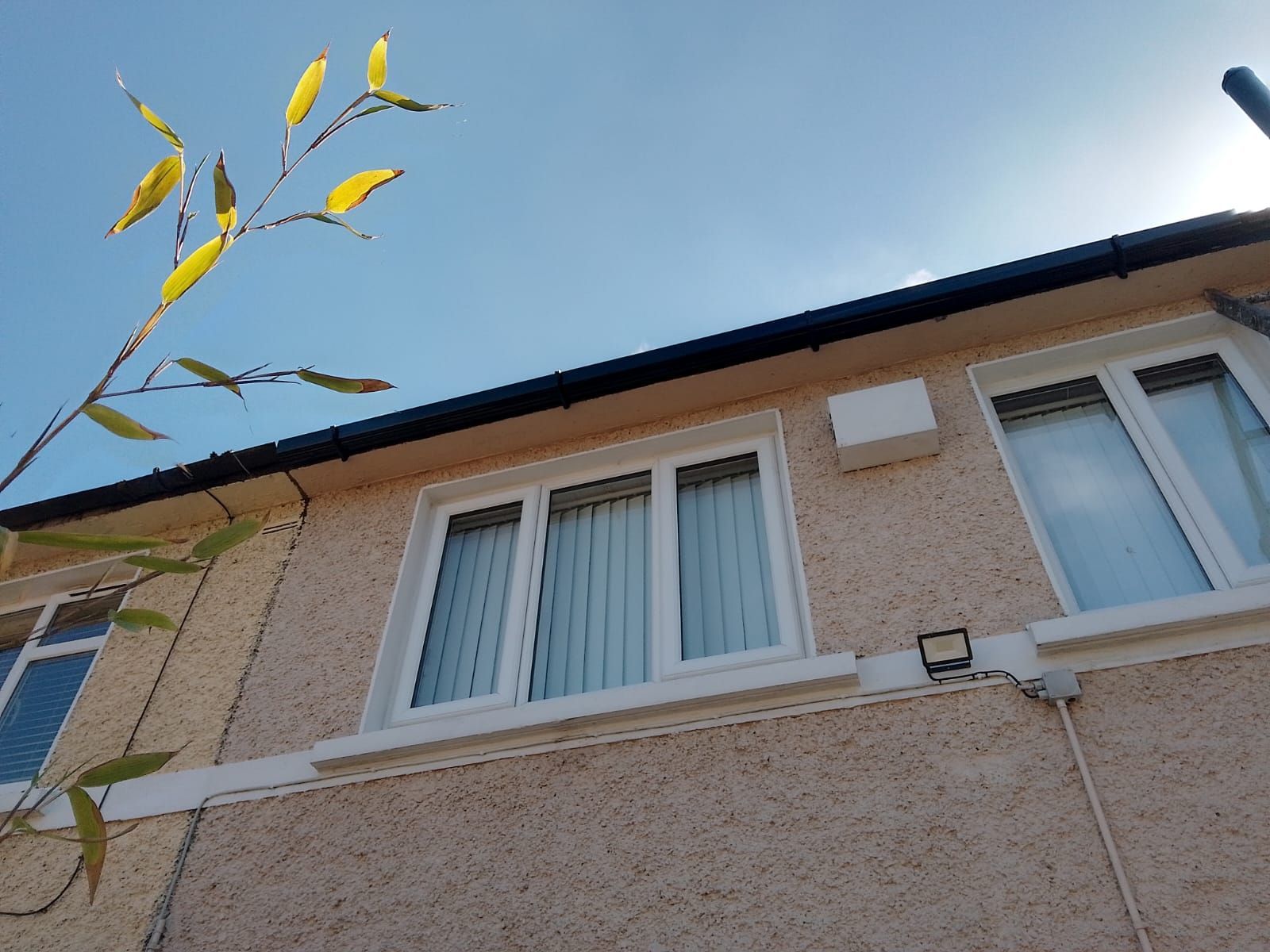
Leaking Gutter Repair in Dublin and What Causes Most Leaks
9 November 2026
Share
Leaking gutter repair and why gutters start to drip
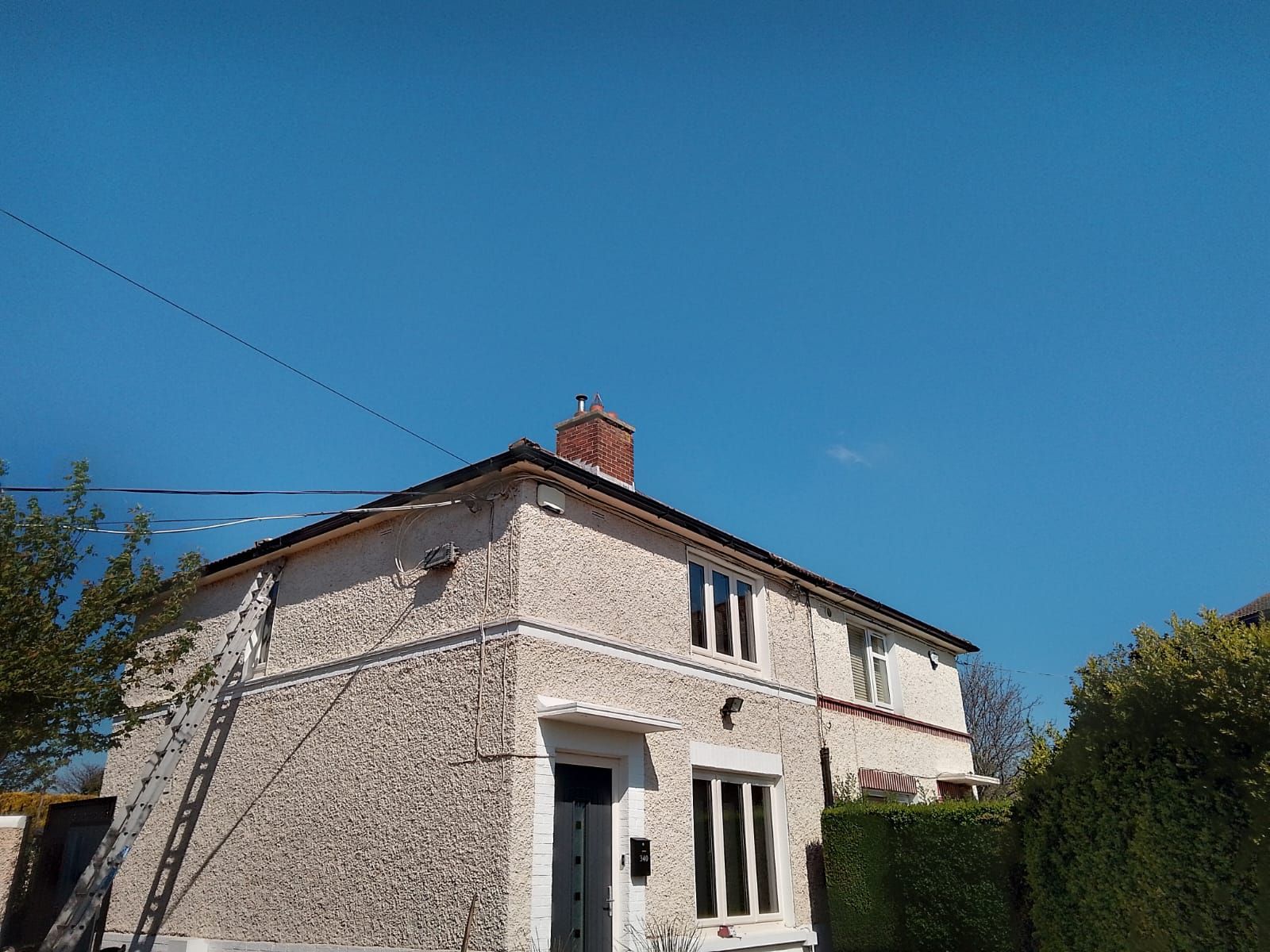
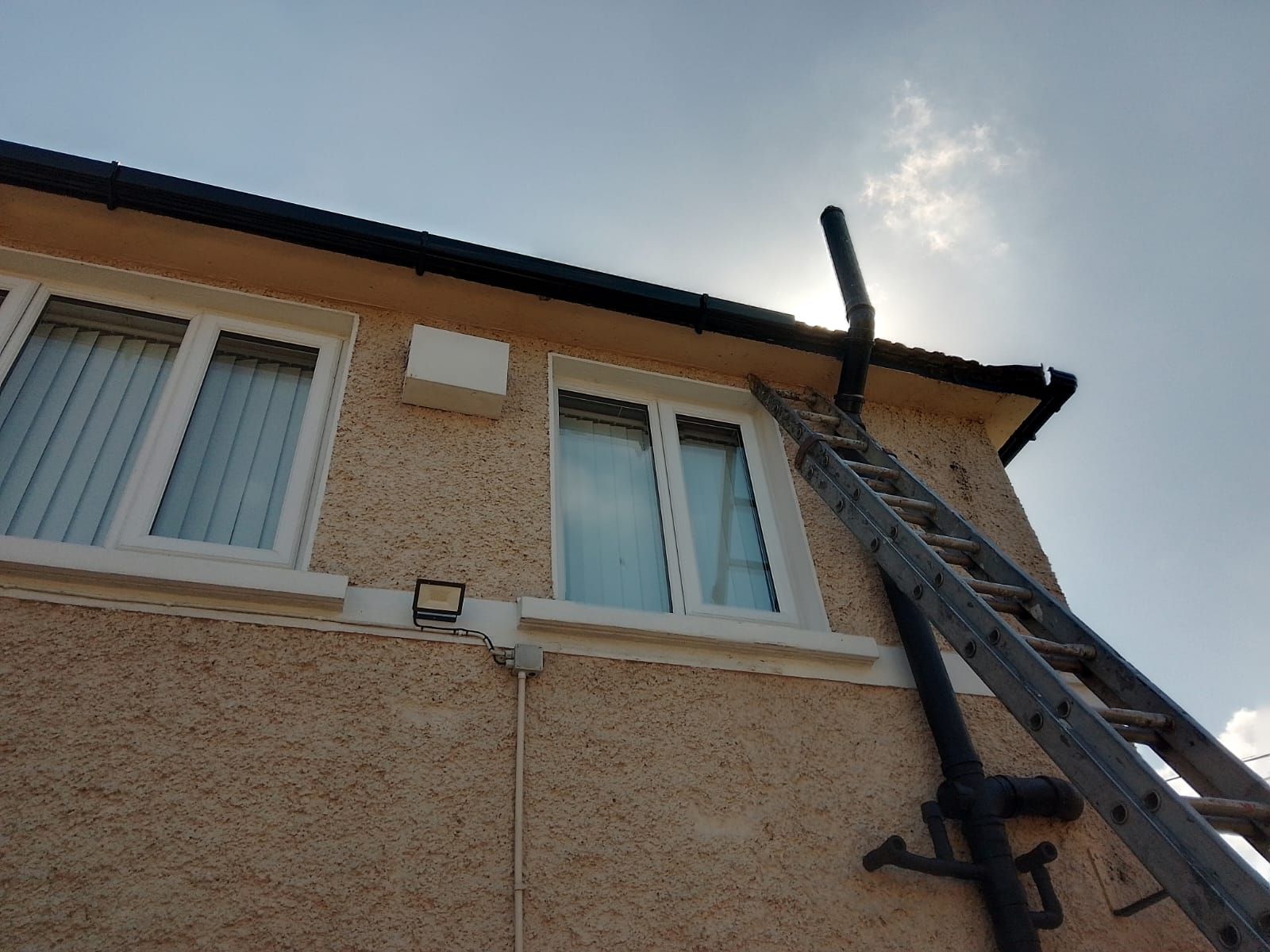
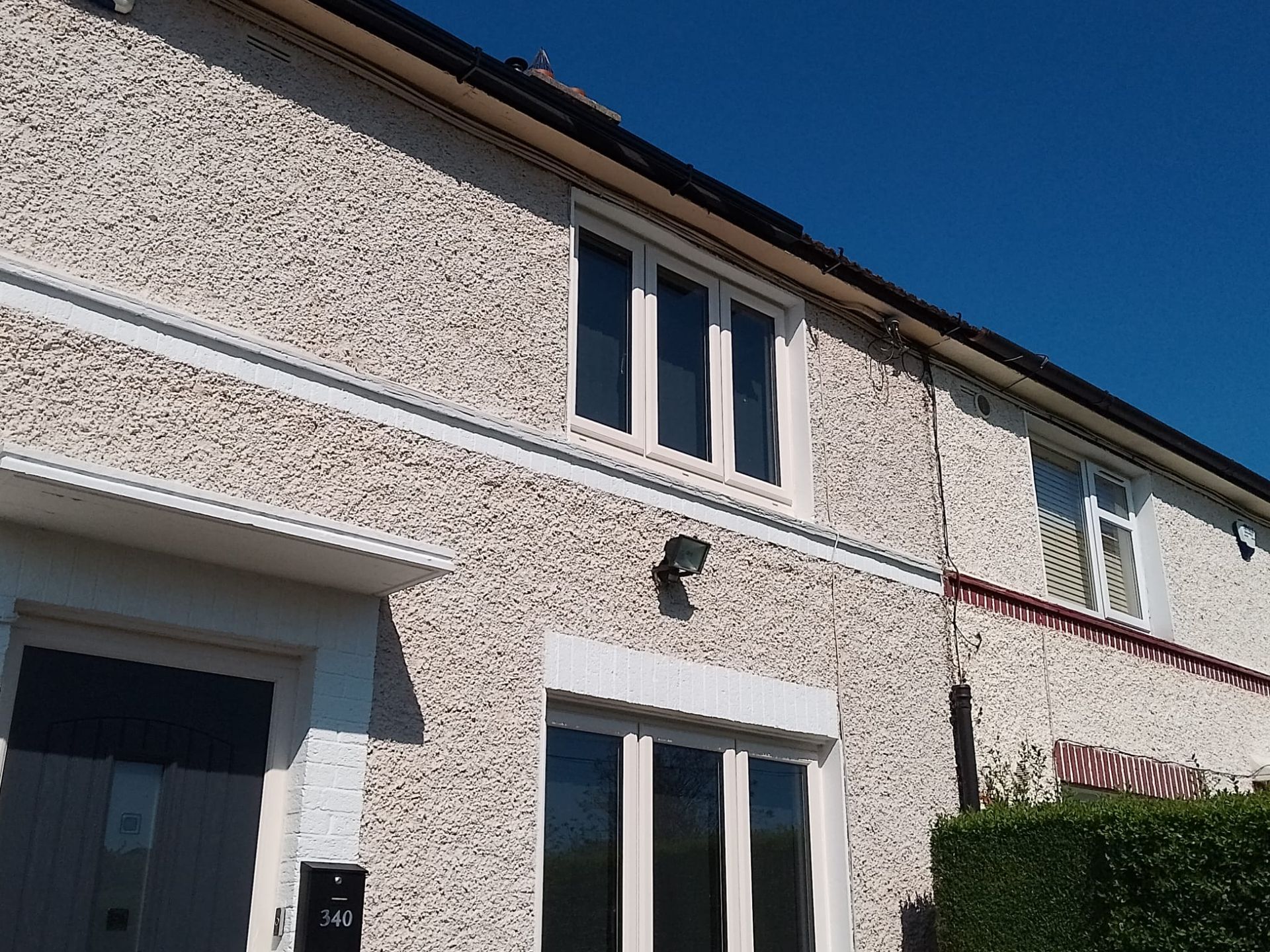
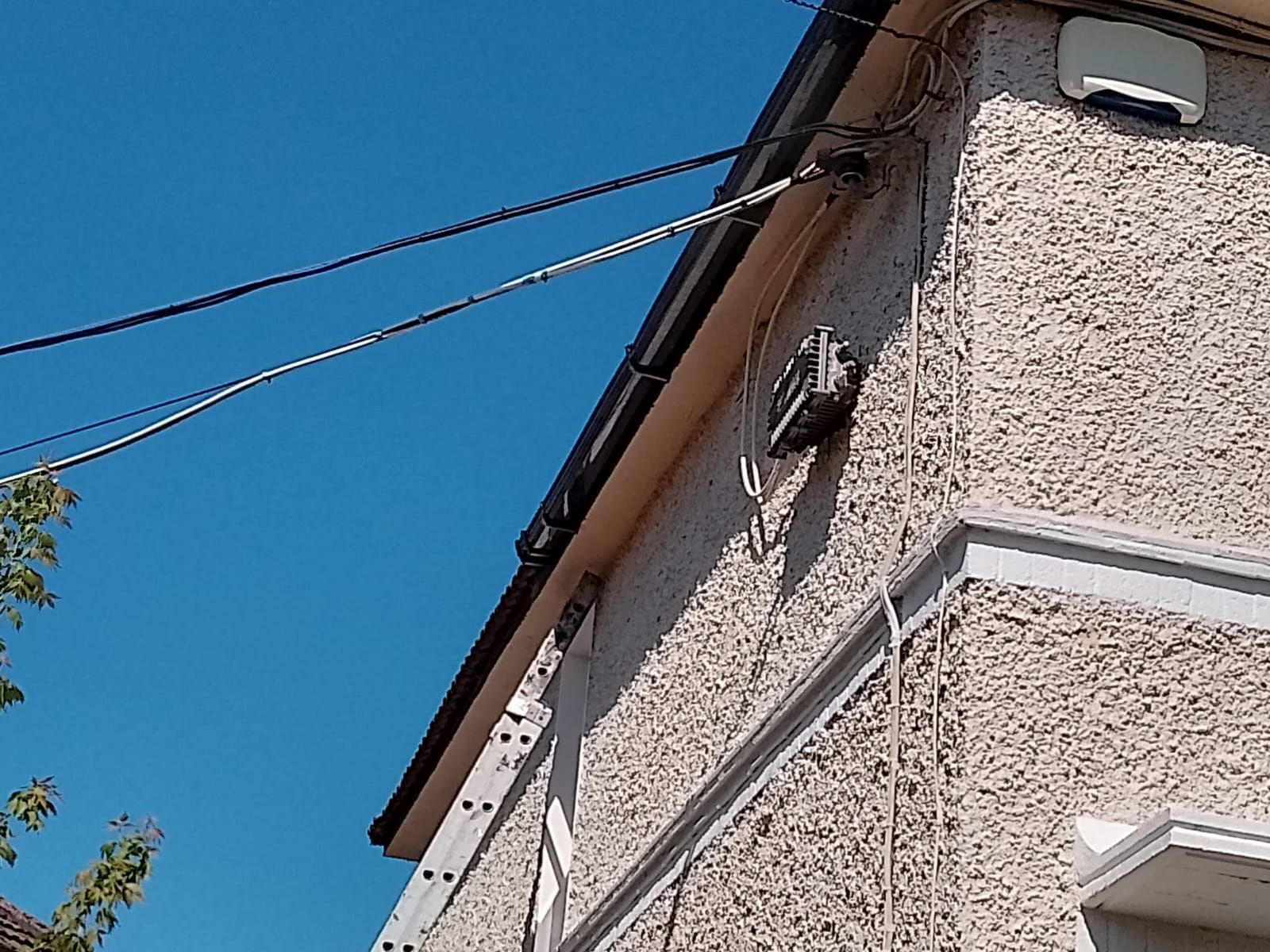
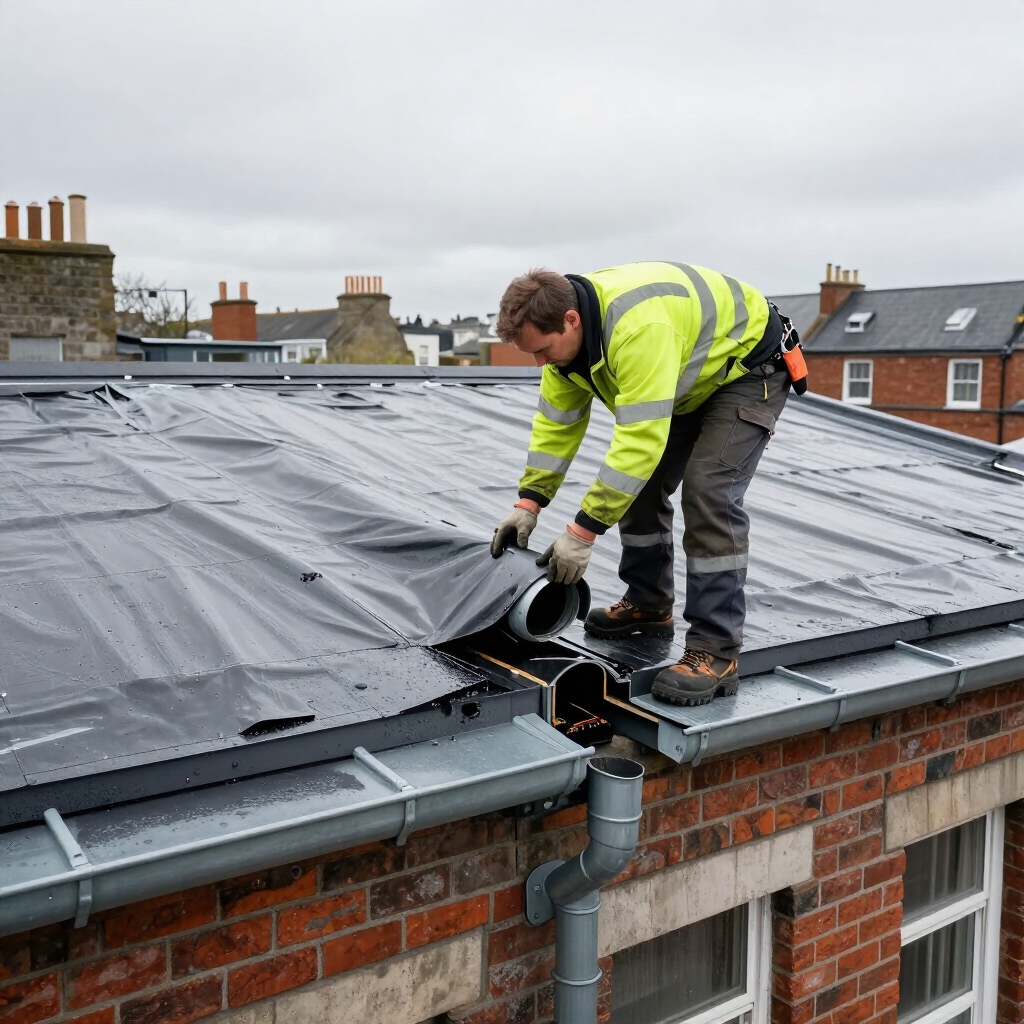
Leaking gutter repair usually means resealing or replacing a failed joint, refitting loose or broken brackets so the gutter falls towards the outlet, clearing blockages, or replacing a cracked length or downpipe section. In Dublin, most leaks we see come from perished joint seals and sagging runs, and both can normally be fixed without replacing the whole system.
Below we explain where gutters leak and why, how to read the signs from the ground, what a proper repair involves, what affects the price, and when replacement makes more sense than another patch.
Where a leaking gutter joint usually fails
Most Irish houses have PVC guttering made from lengths joined by union brackets, corner angles and running outlets. Each of these joints has a rubber seal that the gutter clips into. Over years of sun, frost and movement, that rubber hardens, shrinks and stops gripping the gutter, and water starts to run out through the gap. Replacing these seals and fittings is one of the most common jobs in our gutter repair service.
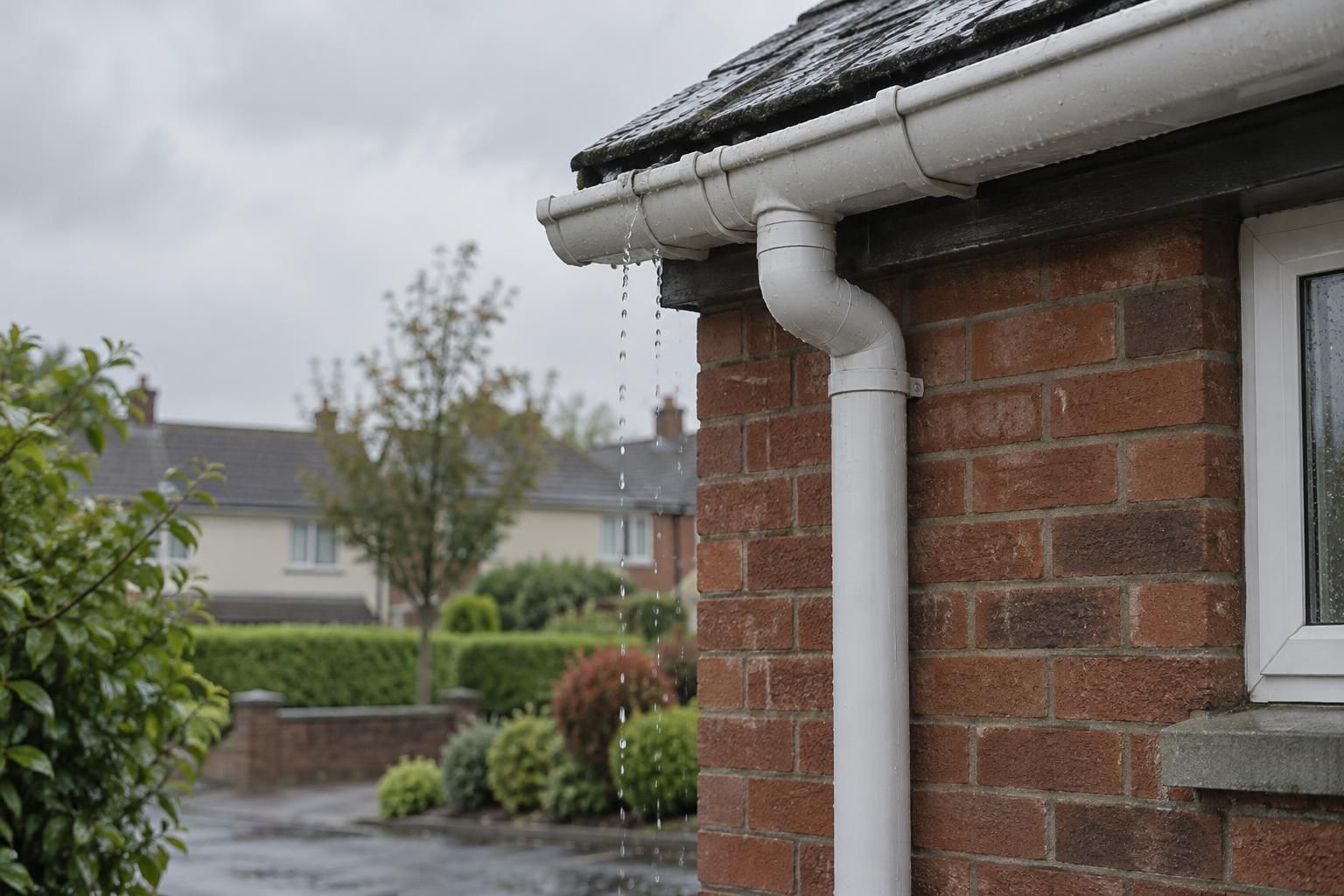
A leaking gutter joint is easy to spot during rain. You will see a steady drip or a thin stream from one point along the run, often leaving a dark streak on the wall or a stain on the soffit below. In dry weather, look for green algae lines on the brickwork or render directly under a joint.
Other common failure points are:
- Stop ends at the end of a run that have been knocked loose or have lost their seal.
- Running outlets where the gutter meets the downpipe, which carry the most water and wear fastest.
- Cracks in older or brittle PVC lengths, often caused by ladders leaning on the gutter.
- Downpipe sockets that have pulled apart, so water sprays out halfway down the wall.
- Gutters on the back of extensions where a valley or flat roof discharges a heavy volume into a short run.
Sagging gutters and blocked outlets
Loose brackets and a lost fall
A gutter has to fall slightly towards its outlet so water drains away instead of sitting in the trough. When brackets snap, lose their screws or are fixed into fascia boards that have softened, the gutter drops between fixings. Water then collects in the low point, spills over the front edge in heavy rain and puts more weight on the remaining brackets.
Sagging gutters are often a sign of a second problem behind them. If the bracket screws will not hold, the timber fascia may be rotten, and fitting new brackets into bad timber only lasts a short time. In that case the fascia needs repair or replacement first, and we check the boards before any new brackets go up.
Signs of a sagging run include a visible dip when you look along the gutter from the end of the house, water pouring over the front edge at one spot, and gaps between the back of the gutter and the fascia.
Blockages that look like leaks
Not every leak is a broken part. A gutter packed with leaves, moss, roof grit and the odd tennis ball cannot carry water to the outlet, so it overflows. From the ground this can look exactly like a failed joint. Moss is a particular problem on Irish roofs because it washes off the tiles and settles in the gutter and the top of the downpipe.
A blockage also adds weight to the gutter and holds water against joint seals for longer, which speeds up wear. That is why we clean out the gutter before we assess a leak. If a run is clean and still drips, the joint or bracket is at fault. If it is blocked, clearing it may solve the problem on its own. Our gutter cleaning service covers gutters and downpipes, and our post on gutter cleaning and fascia checks before winter explains what to look for at this time of year.
How we carry out uPVC gutter repairs
We start every job with a free inspection and survey. Every repair follows the same basic order so the cause of the leak is fixed, not only the symptom.
- Clear the gutter and check that the downpipe is running freely, since a blocked downpipe makes every joint above it work harder.
- Check the fall along each run and look for low spots, broken brackets and loose fixings.
- Inspect the fascia behind the brackets to make sure the timber or uPVC board will hold new screws.
- Replace failed union brackets, stop ends or outlets, or reseat the gutter in its seals where the rubber is still in good condition.
- Refit or add brackets so the gutter holds its fall, and replace any cracked lengths or downpipe sections.
- Run water through the system and check every joint before we leave.
Sealant alone is rarely a lasting fix on PVC guttering. The gutter expands and contracts with temperature, and a bead of silicone over a perished seal tends to split within a season. Replacing the fitting gives a proper seal. Where a system is old or uses a discontinued profile, matching parts can be hard to find, and that affects whether a repair is practical.
What affects the cost of leaking gutter repair
We price each job after the free inspection, because the same drip can have very different causes. The main factors are:
- Access. A single-storey extension is quicker and simpler than a three-storey gable or a gutter above a conservatory.
- Number of faults. One failed joint is a small job. Several joints, loose brackets and a cracked outlet on the same run take longer.
- Condition of the fascia. Rotten timber behind the gutter must be dealt with before new brackets go up.
- Gutter profile and material. Common half-round and square PVC parts are easy to source. Older or unusual profiles may mean replacing a whole run.
- Blockages. Heavy moss or debris in gutters and downpipes adds cleaning time.
Before you agree to any work, ask the contractor exactly what is causing the leak, which parts they will replace, whether the fascia is sound and whether they are insured. We are registered and fully insured, and if we spot other problems while we are on the ladder we will tell you.
When to replace gutters instead of repairing them
Repair is the right choice when the gutter is in reasonable condition and the leaks come from a few joints or brackets. Replacement makes more sense when the PVC has gone brittle and cracks easily, when joints keep failing along the whole run, when parts are no longer available for the profile, or when the gutter is too small for the roof area it drains.
If replacement is the better option, we supply and fit new PVC gutters and downpipes. Seamless gutters are another option because they are cut to size with no joints along the run, which removes the most common source of leaks. Our post on seamless gutters and new fascia boards explains how that works.
November is a sensible time to act. Leaves have mostly fallen, most of the winter rain is still ahead, and water running down a wall for months can lead to damp patches inside, stained render and rot in fascia and soffit boards.
Getting a leaking gutter fixed in Dublin
A drip from a gutter is rarely a sign that the whole system has failed. Prompt leaking gutter repair, whether that means new joint seals, refitted brackets or clearing a blockage, protects your walls, fascia and foundations through the winter. We carry out these repairs for homes and businesses throughout Dublin and the surrounding areas.
To book a free inspection and quote, contact KP Gutters or call us on 085 737 4475. You can also email info@gutterrepairsdublin.ie and we will get back to you.
Recent Posts
Leaking gutter repair and why gutters start to drip
Leaking gutter repair usually means resealing or replacing a failed joint, refitting loose or broken brackets so the gutter falls towards the outlet, clearing blockages, or replacing a cracked length or downpipe section. In Dublin, most leaks we see come from perished joint seals and sagging runs, and both can normally be fixed without replacing the whole system.
Below we explain where gutters leak and why, how to read the signs from the ground, what a proper repair involves, what affects the price, and when replacement makes more sense than another patch.
Where a leaking gutter joint usually fails
Most Irish houses have PVC guttering made from lengths joined by union brackets, corner angles and running outlets. Each of these joints has a rubber seal that the gutter clips into. Over years of sun, frost and movement, that rubber hardens, shrinks and stops gripping the gutter, and water starts to run out through the gap. Replacing these seals and fittings is one of the most common jobs in our gutter repair service.
A leaking gutter joint is easy to spot during rain. You will see a steady drip or a thin stream from one point along the run, often leaving a dark streak on the wall or a stain on the soffit below. In dry weather, look for green algae lines on the brickwork or render directly under a joint.
Other common failure points are:
- Stop ends at the end of a run that have been knocked loose or have lost their seal.
- Running outlets where the gutter meets the downpipe, which carry the most water and wear fastest.
- Cracks in older or brittle PVC lengths, often caused by ladders leaning on the gutter.
- Downpipe sockets that have pulled apart, so water sprays out halfway down the wall.
- Gutters on the back of extensions where a valley or flat roof discharges a heavy volume into a short run.
Sagging gutters and blocked outlets
Loose brackets and a lost fall
A gutter has to fall slightly towards its outlet so water drains away instead of sitting in the trough. When brackets snap, lose their screws or are fixed into fascia boards that have softened, the gutter drops between fixings. Water then collects in the low point, spills over the front edge in heavy rain and puts more weight on the remaining brackets.
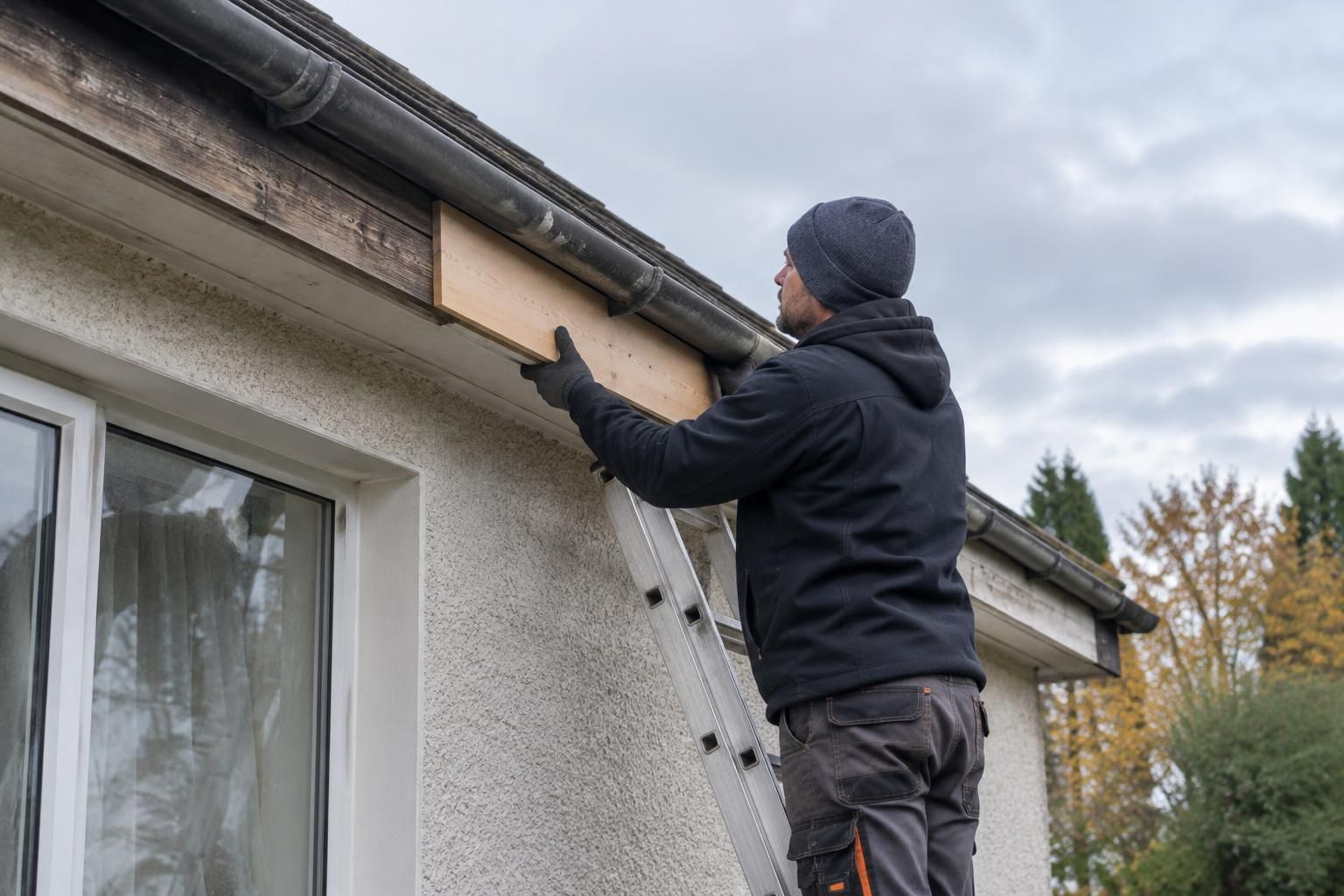
Sagging gutters are often a sign of a second problem behind them. If the bracket screws will not hold, the timber fascia may be rotten, and fitting new brackets into bad timber only lasts a short time. In that case the fascia needs repair or replacement first, and we check the boards before any new brackets go up.
Signs of a sagging run include a visible dip when you look along the gutter from the end of the house, water pouring over the front edge at one spot, and gaps between the back of the gutter and the fascia.
Blockages that look like leaks
Not every leak is a broken part. A gutter packed with leaves, moss, roof grit and the odd tennis ball cannot carry water to the outlet, so it overflows. From the ground this can look exactly like a failed joint. Moss is a particular problem on Irish roofs because it washes off the tiles and settles in the gutter and the top of the downpipe.
A blockage also adds weight to the gutter and holds water against joint seals for longer, which speeds up wear. That is why we clean out the gutter before we assess a leak. If a run is clean and still drips, the joint or bracket is at fault. If it is blocked, clearing it may solve the problem on its own. Our gutter cleaning service covers gutters and downpipes, and our post on gutter cleaning and fascia checks before winter explains what to look for at this time of year.
How we carry out uPVC gutter repairs
We start every job with a free inspection and survey. Every repair follows the same basic order so the cause of the leak is fixed, not only the symptom.
- Clear the gutter and check that the downpipe is running freely, since a blocked downpipe makes every joint above it work harder.
- Check the fall along each run and look for low spots, broken brackets and loose fixings.
- Inspect the fascia behind the brackets to make sure the timber or uPVC board will hold new screws.
- Replace failed union brackets, stop ends or outlets, or reseat the gutter in its seals where the rubber is still in good condition.
- Refit or add brackets so the gutter holds its fall, and replace any cracked lengths or downpipe sections.
- Run water through the system and check every joint before we leave.
Sealant alone is rarely a lasting fix on PVC guttering. The gutter expands and contracts with temperature, and a bead of silicone over a perished seal tends to split within a season. Replacing the fitting gives a proper seal. Where a system is old or uses a discontinued profile, matching parts can be hard to find, and that affects whether a repair is practical.
What affects the cost of leaking gutter repair
We price each job after the free inspection, because the same drip can have very different causes. The main factors are:
- Access. A single-storey extension is quicker and simpler than a three-storey gable or a gutter above a conservatory.
- Number of faults. One failed joint is a small job. Several joints, loose brackets and a cracked outlet on the same run take longer.
- Condition of the fascia. Rotten timber behind the gutter must be dealt with before new brackets go up.
- Gutter profile and material. Common half-round and square PVC parts are easy to source. Older or unusual profiles may mean replacing a whole run.
- Blockages. Heavy moss or debris in gutters and downpipes adds cleaning time.
Before you agree to any work, ask the contractor exactly what is causing the leak, which parts they will replace, whether the fascia is sound and whether they are insured. We are registered and fully insured, and if we spot other problems while we are on the ladder we will tell you.
When to replace gutters instead of repairing them
Repair is the right choice when the gutter is in reasonable condition and the leaks come from a few joints or brackets. Replacement makes more sense when the PVC has gone brittle and cracks easily, when joints keep failing along the whole run, when parts are no longer available for the profile, or when the gutter is too small for the roof area it drains.
If replacement is the better option, we supply and fit new PVC gutters and downpipes. Seamless gutters are another option because they are cut to size with no joints along the run, which removes the most common source of leaks. Our post on seamless gutters and new fascia boards explains how that works.
November is a sensible time to act. Leaves have mostly fallen, most of the winter rain is still ahead, and water running down a wall for months can lead to damp patches inside, stained render and rot in fascia and soffit boards.
Getting a leaking gutter fixed in Dublin
A drip from a gutter is rarely a sign that the whole system has failed. Prompt leaking gutter repair, whether that means new joint seals, refitted brackets or clearing a blockage, protects your walls, fascia and foundations through the winter. We carry out these repairs for homes and businesses throughout Dublin and the surrounding areas.
To book a free inspection and quote, contact KP Gutters or call us on 085 737 4475. You can also email info@gutterrepairsdublin.ie and we will get back to you.