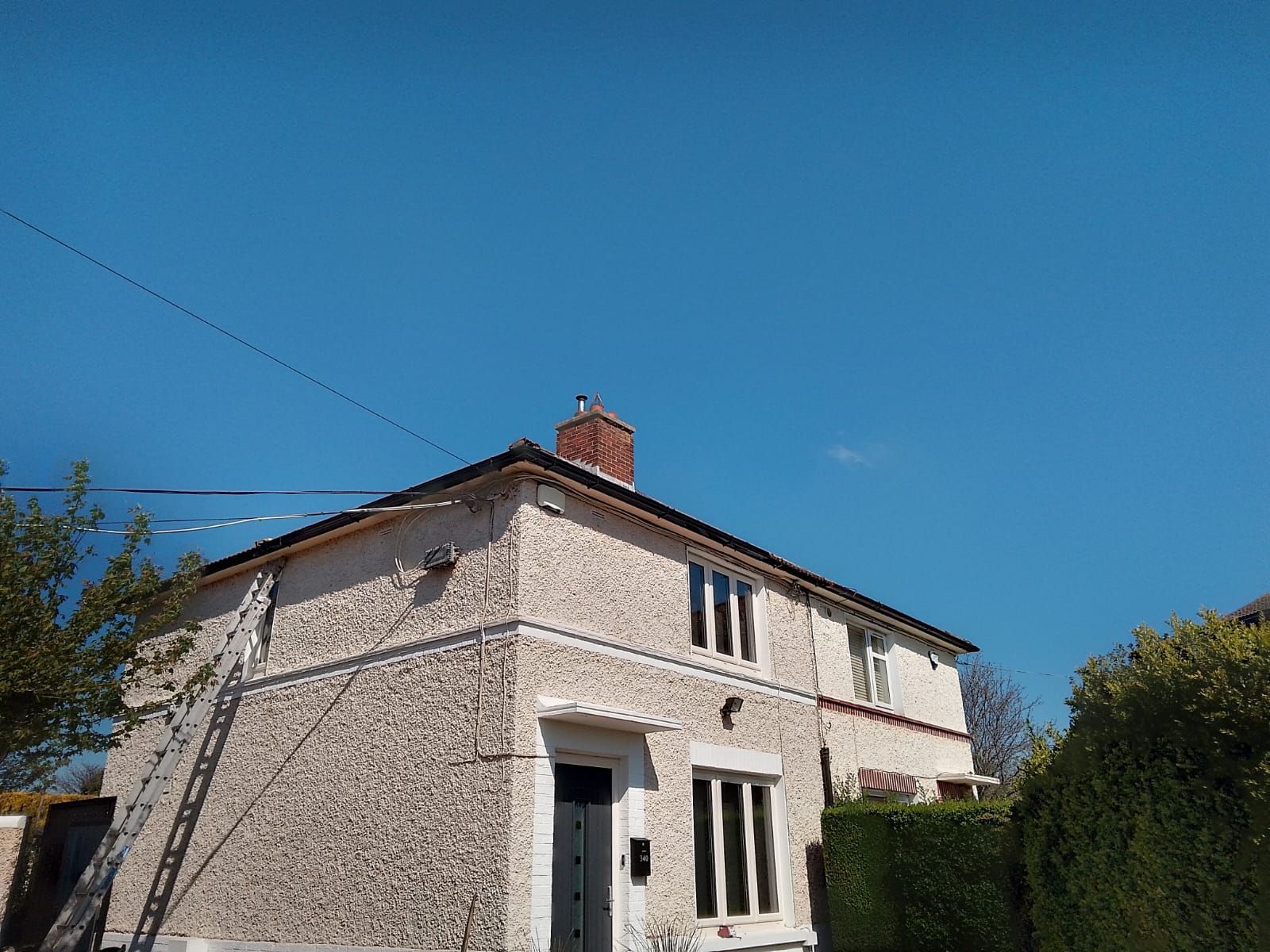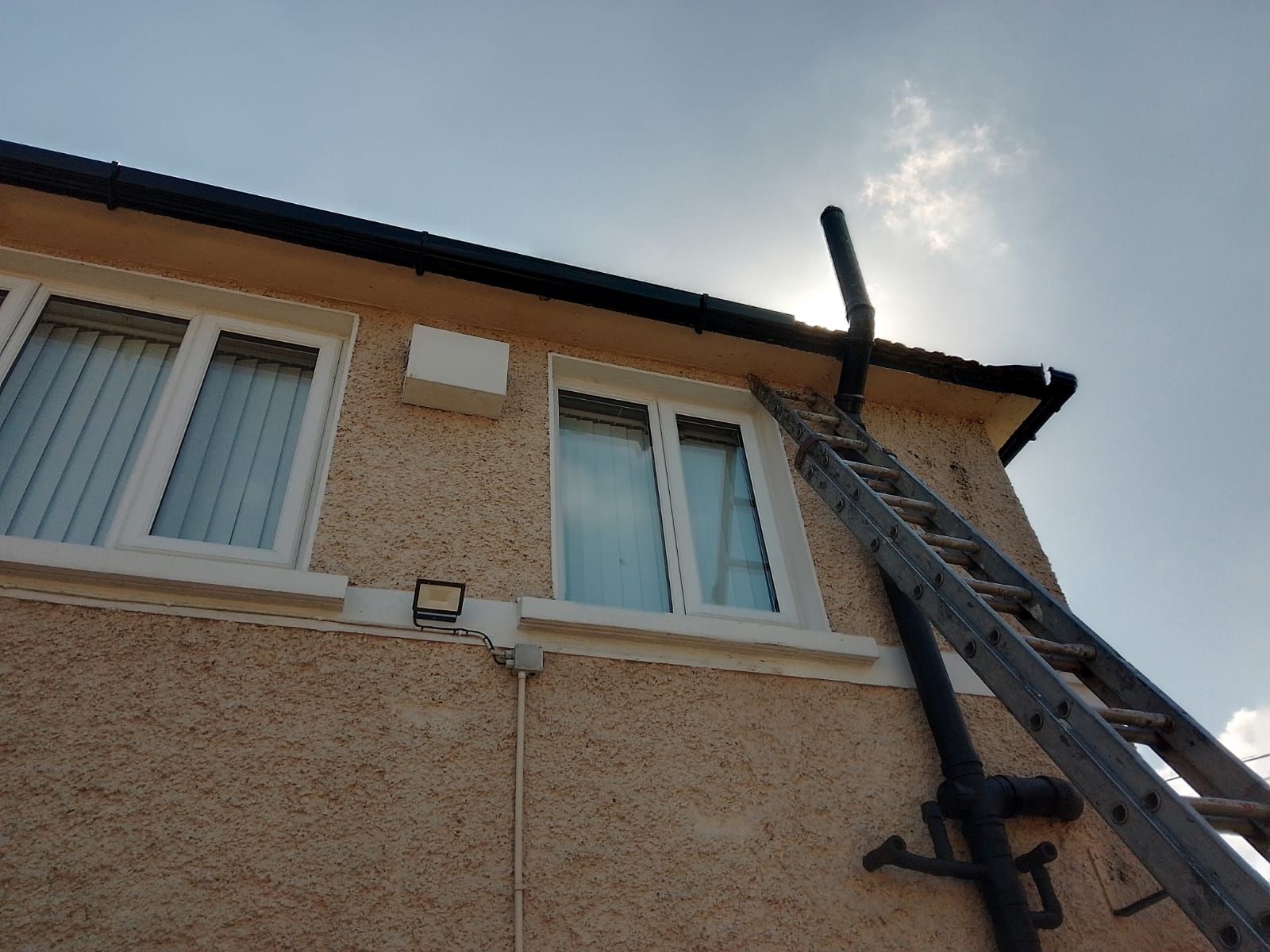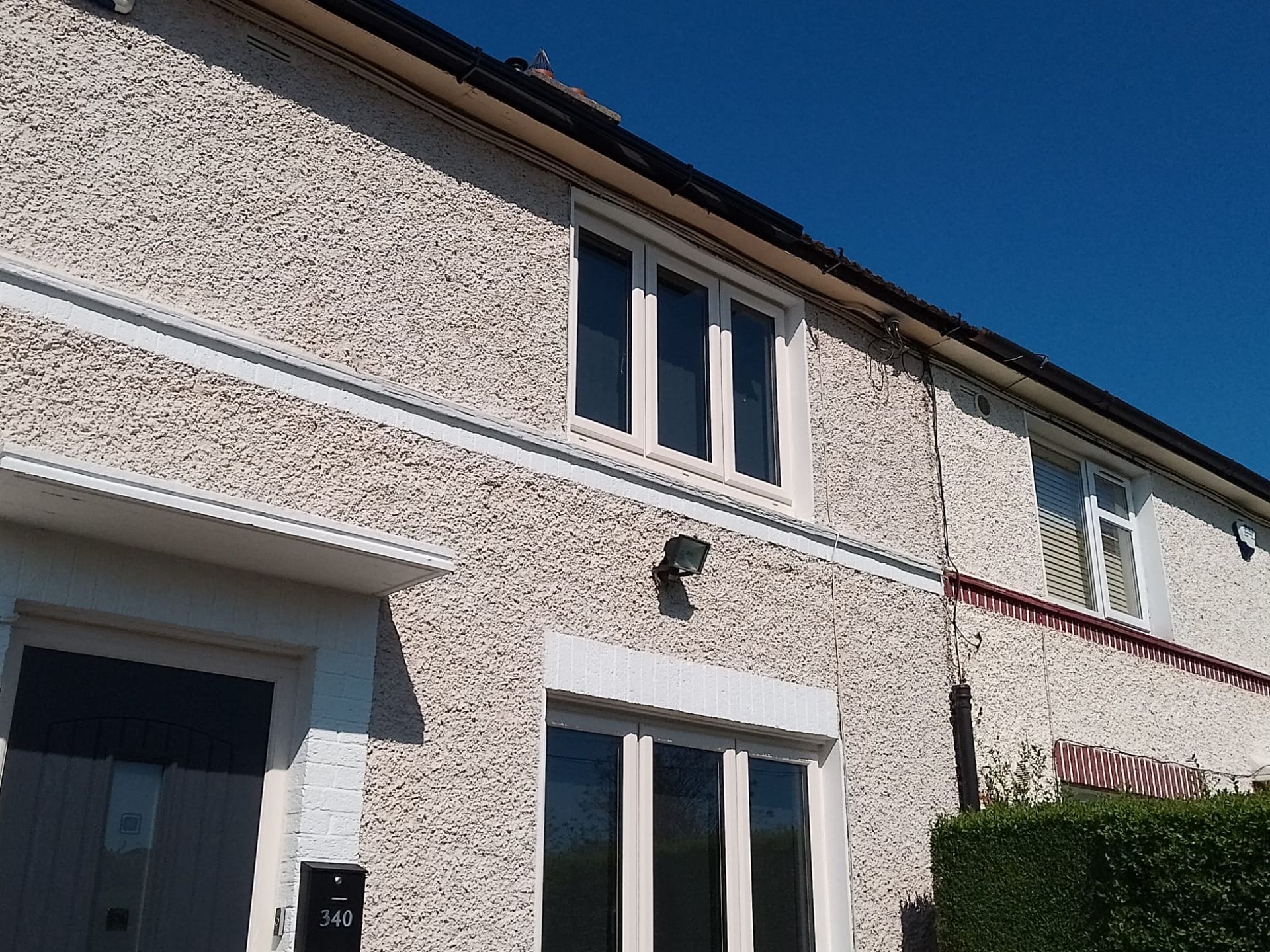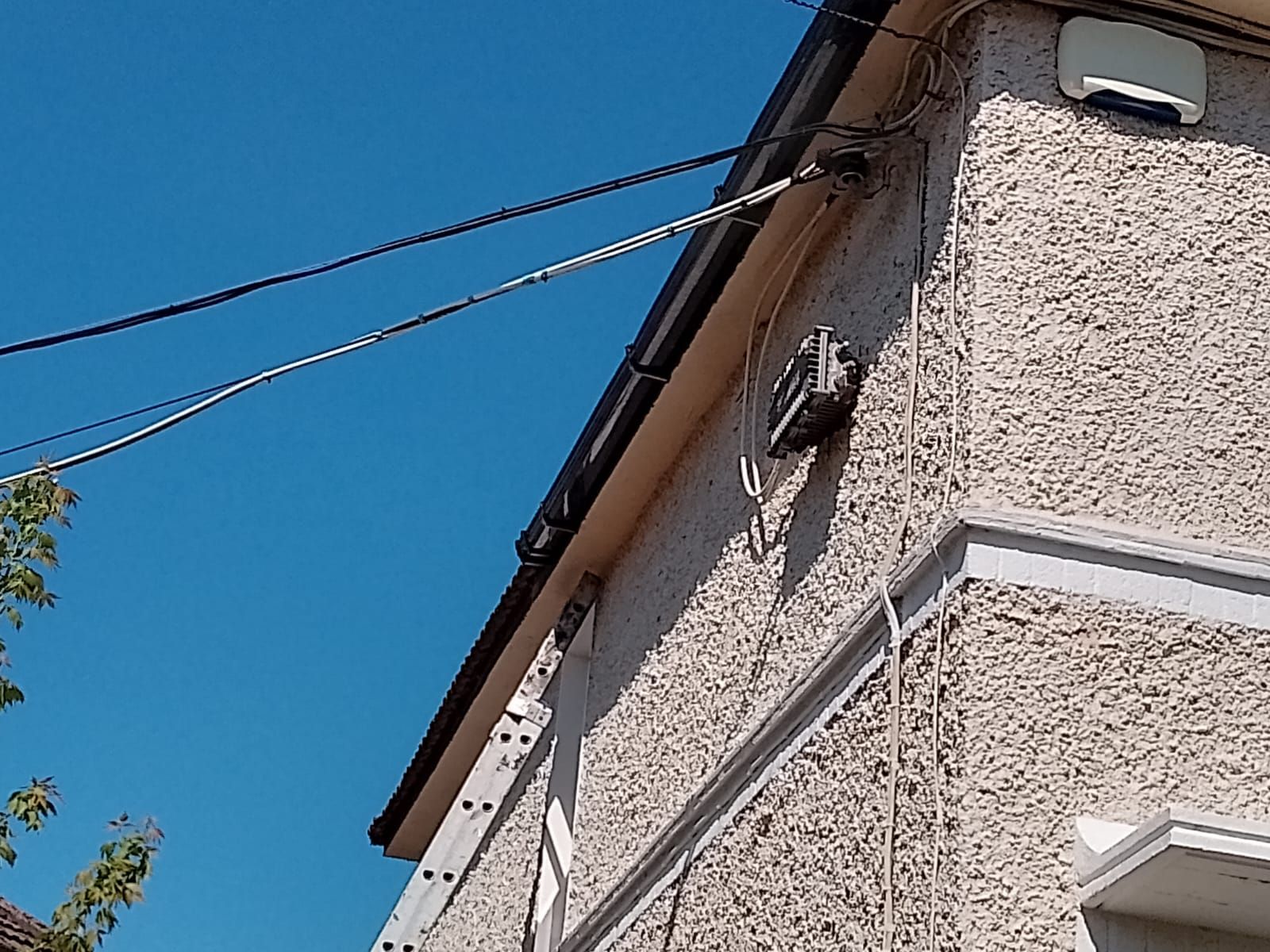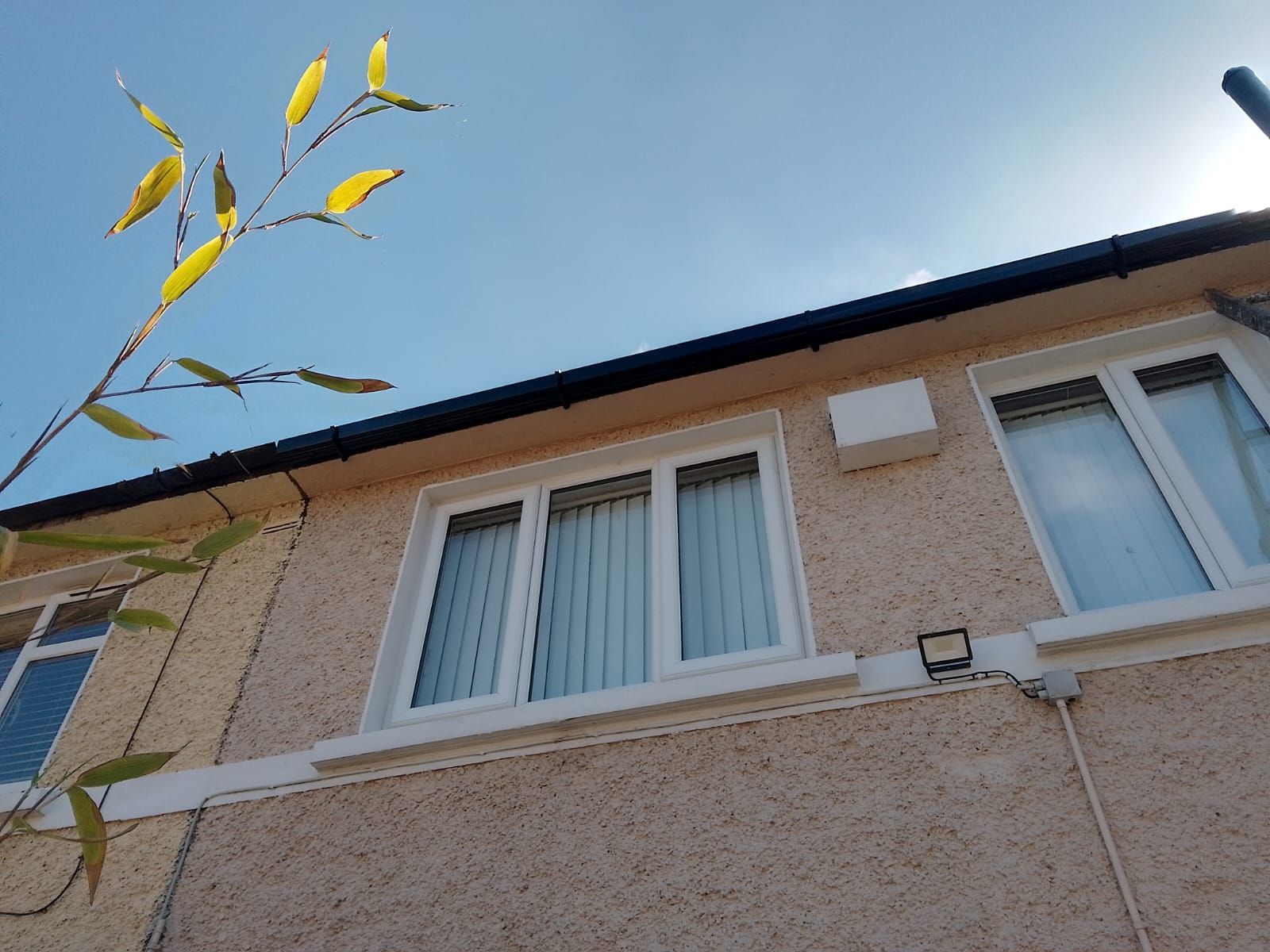
Gutter Cleaning and Fascia Checks Before Winter in Dublin
3 November 2026
Share
Why Gutter Cleaning Before Winter Matters in Dublin
Gutter cleaning before winter means clearing the leaves, moss and silt that collect in gutters and downpipes over autumn, so heavy rain can drain away from your walls. In Dublin, early November is the right time, and it is also the best moment to check fascia, soffits and barge boards for damage before storms arrive.
Below we explain what builds up in gutters during autumn, how blocked downpipes cause damp, what a proper clean involves, and how to spot fascia, soffit and barge board problems that need a repair rather than a simple clean.
What Collects in Gutters During Autumn
By the start of November most deciduous trees around Dublin have shed the bulk of their leaves. Leaves land on the roof, slide down the slates or tiles and settle in the gutter, where they mat together with moss washed off the roof, grit from concrete tiles and seeds blown in from gardens. Within a few weeks that mix can become a dense, wet sludge that holds water rather than letting it flow.
Houses near mature trees, parks or open green spaces fill fastest, but even homes on open estates gather moss and roof grit. Gutters at the back of a house are often worse than those at the front simply because nobody looks at them. Small plants and grass can root in the silt, and once that happens the gutter stays wet all year.
When a gutter is full, rain spills over the front edge or backs up behind it. Water running down the face of the wall soaks render and brickwork, and water trapped behind the gutter soaks into the fascia board it is fixed to.
Blocked Downpipes and Winter Rain
A clean gutter is only half the job. Every gutter run empties into a downpipe, and the downpipe is where blockages usually end up. Leaves and silt wash towards the outlet, collect at the bend at the top of the pipe (the swan neck) and pack down until nothing can pass. You may see water pouring over one section of gutter while the rest looks clear, which usually points to a blocked outlet or downpipe.
Winter in Ireland brings long spells of rain and regular storms, and a blocked downpipe can overflow within minutes in a heavy shower. Overflowing water splashes against the base of the wall, soaks into the ground beside the foundations and can show up indoors as damp patches, peeling paint or mould around window reveals. In a cold snap, water standing in a blocked pipe can freeze, and the ice can split older downpipes or push joints apart.
It is worth keeping an eye on Met Éireann's weather warnings for Dublin through the winter. If wind or rain warnings are forecast, clear gutters and free-flowing downpipes give your home a much better chance of coping.
What Our Gutter Cleaning Involves
When we carry out gutter cleaning in Dublin, we treat the gutters, outlets and downpipes as one drainage system. A typical visit follows these steps:
- We inspect the gutters, roof edge and downpipes from ground level and from access equipment to see where debris has built up.
- We remove leaves, moss, silt and plant growth from every gutter run by hand, bagging the waste rather than throwing it onto your garden.
- We clear the outlets and swan necks and work through each downpipe until it runs freely.
- We flush the gutters with water to confirm they drain towards the outlets and that no section holds standing water.
- We check the joints, brackets and fall of the gutter for leaks or sagging while we are up there.
- We look over the fascia, soffits, box ends and barge boards and tell you about anything that needs attention.
That last step matters. Because we are already at roof level, a clean is the easiest time to spot problems early, and if we notice something we point it out. We keep disruption to a minimum and leave the area as we found it.
Checking Fascia, Soffits and Barge Boards
The fascia is the board along the roof edge that the gutter is fixed to. The soffit is the panel underneath it, closing off the gap between the fascia and the wall. Barge boards run up the sloping edge of a gable end, and box ends are the small sections where the fascia and soffit meet at a corner. Together they protect the ends of the roof timbers from weather, birds and pests.
Overflowing gutters are one of the most common causes of damage to these boards. Water that runs behind a gutter soaks into the fascia, and on older homes with timber boards that can lead to rot. Even on PVC boards, constant wetting leaves green staining and can loosen fixings over time.
Signs your fascia, soffit or barge boards need attention
- Soft, flaking or crumbling timber along the roof edge, often worst behind a gutter joint or outlet.
- Peeling paint or dark water stains on fascia boards or on the wall just below them.
- Gutters that sag, pull away from the fascia or have loose brackets.
- Soffit panels that are cracked, bowed, missing or hanging down.
- Gaps at box ends or along barge boards where birds, wasps or rodents could get in.
- Green algae or heavy staining that keeps coming back even after cleaning.
When cleaning is enough and when repair is needed
Staining and grime on sound PVC boards usually only need cleaning, which we can do at the same time as the gutters. If a board is soft, split or no longer holding gutter brackets securely, cleaning will not fix it, and the board needs repair or replacement before the gutter can be refitted properly. Our fascia and soffit repairs cover fascia, soffits, box ends and barge boards, and vent systems are available where a roof needs extra ventilation. If the gutter itself is cracked, leaking at the joints or sagging, our gutter repairs in Dublin can put that right.
Timing Your Pre-Winter Check
For most homes in Dublin, one thorough clean in late autumn, once the leaves have mostly fallen, keeps gutters working through the winter. Homes surrounded by trees may also benefit from a second clean in spring, as some species drop seeds and catkins later in the year. Leaving the job until after the first big storm means any damage from overflowing water has already started.
Working on gutters means working at height on ladders, often over paths, conservatories or uneven ground, and wet leaves make every surface slippery. If you are not comfortable at height, or your gutters are above a single storey, it is safer to have a professional do it. KP Gutters is registered and fully insured, and we work on residential, commercial and industrial buildings.
Book Gutter Cleaning Before Winter in Dublin
Gutter cleaning before winter is a simple job that protects your walls, roof edge and interior from the damp that Irish winters bring. Clearing gutters and downpipes now, and having fascia, soffits and barge boards checked at the same time, lets you deal with small problems before storms turn them into bigger ones. KP Gutters is a family-run Dublin company with around 30 years of experience, working across Dublin and the surrounding areas, and every job starts with a free inspection, survey and quote.
To arrange your pre-winter gutter clean and fascia check, contact KP Gutters today. Call 085 737 4475 or 01 831 0523, or email info@gutterrepairsdublin.ie.
Recent Posts

Why Gutter Cleaning Before Winter Matters in Dublin
Gutter cleaning before winter means clearing the leaves, moss and silt that collect in gutters and downpipes over autumn, so heavy rain can drain away from your walls. In Dublin, early November is the right time, and it is also the best moment to check fascia, soffits and barge boards for damage before storms arrive.
Below we explain what builds up in gutters during autumn, how blocked downpipes cause damp, what a proper clean involves, and how to spot fascia, soffit and barge board problems that need a repair rather than a simple clean.
What Collects in Gutters During Autumn
By the start of November most deciduous trees around Dublin have shed the bulk of their leaves. Leaves land on the roof, slide down the slates or tiles and settle in the gutter, where they mat together with moss washed off the roof, grit from concrete tiles and seeds blown in from gardens. Within a few weeks that mix can become a dense, wet sludge that holds water rather than letting it flow.
Houses near mature trees, parks or open green spaces fill fastest, but even homes on open estates gather moss and roof grit. Gutters at the back of a house are often worse than those at the front simply because nobody looks at them. Small plants and grass can root in the silt, and once that happens the gutter stays wet all year.
When a gutter is full, rain spills over the front edge or backs up behind it. Water running down the face of the wall soaks render and brickwork, and water trapped behind the gutter soaks into the fascia board it is fixed to.
Blocked Downpipes and Winter Rain
A clean gutter is only half the job. Every gutter run empties into a downpipe, and the downpipe is where blockages usually end up. Leaves and silt wash towards the outlet, collect at the bend at the top of the pipe (the swan neck) and pack down until nothing can pass. You may see water pouring over one section of gutter while the rest looks clear, which usually points to a blocked outlet or downpipe.
Winter in Ireland brings long spells of rain and regular storms, and a blocked downpipe can overflow within minutes in a heavy shower. Overflowing water splashes against the base of the wall, soaks into the ground beside the foundations and can show up indoors as damp patches, peeling paint or mould around window reveals. In a cold snap, water standing in a blocked pipe can freeze, and the ice can split older downpipes or push joints apart.
It is worth keeping an eye on Met Éireann's weather warnings for Dublin through the winter. If wind or rain warnings are forecast, clear gutters and free-flowing downpipes give your home a much better chance of coping.
What Our Gutter Cleaning Involves
When we carry out gutter cleaning in Dublin, we treat the gutters, outlets and downpipes as one drainage system. A typical visit follows these steps:
- We inspect the gutters, roof edge and downpipes from ground level and from access equipment to see where debris has built up.
- We remove leaves, moss, silt and plant growth from every gutter run by hand, bagging the waste rather than throwing it onto your garden.
- We clear the outlets and swan necks and work through each downpipe until it runs freely.
- We flush the gutters with water to confirm they drain towards the outlets and that no section holds standing water.
- We check the joints, brackets and fall of the gutter for leaks or sagging while we are up there.
- We look over the fascia, soffits, box ends and barge boards and tell you about anything that needs attention.
That last step matters. Because we are already at roof level, a clean is the easiest time to spot problems early, and if we notice something we point it out. We keep disruption to a minimum and leave the area as we found it.
Checking Fascia, Soffits and Barge Boards
The fascia is the board along the roof edge that the gutter is fixed to. The soffit is the panel underneath it, closing off the gap between the fascia and the wall. Barge boards run up the sloping edge of a gable end, and box ends are the small sections where the fascia and soffit meet at a corner. Together they protect the ends of the roof timbers from weather, birds and pests.
Overflowing gutters are one of the most common causes of damage to these boards. Water that runs behind a gutter soaks into the fascia, and on older homes with timber boards that can lead to rot. Even on PVC boards, constant wetting leaves green staining and can loosen fixings over time.
Signs your fascia, soffit or barge boards need attention
- Soft, flaking or crumbling timber along the roof edge, often worst behind a gutter joint or outlet.
- Peeling paint or dark water stains on fascia boards or on the wall just below them.
- Gutters that sag, pull away from the fascia or have loose brackets.
- Soffit panels that are cracked, bowed, missing or hanging down.
- Gaps at box ends or along barge boards where birds, wasps or rodents could get in.
- Green algae or heavy staining that keeps coming back even after cleaning.
When cleaning is enough and when repair is needed
Staining and grime on sound PVC boards usually only need cleaning, which we can do at the same time as the gutters. If a board is soft, split or no longer holding gutter brackets securely, cleaning will not fix it, and the board needs repair or replacement before the gutter can be refitted properly. Our fascia and soffit repairs cover fascia, soffits, box ends and barge boards, and vent systems are available where a roof needs extra ventilation. If the gutter itself is cracked, leaking at the joints or sagging, our gutter repairs in Dublin can put that right.
Timing Your Pre-Winter Check
For most homes in Dublin, one thorough clean in late autumn, once the leaves have mostly fallen, keeps gutters working through the winter. Homes surrounded by trees may also benefit from a second clean in spring, as some species drop seeds and catkins later in the year. Leaving the job until after the first big storm means any damage from overflowing water has already started.
Working on gutters means working at height on ladders, often over paths, conservatories or uneven ground, and wet leaves make every surface slippery. If you are not comfortable at height, or your gutters are above a single storey, it is safer to have a professional do it. KP Gutters is registered and fully insured, and we work on residential, commercial and industrial buildings.
Book Gutter Cleaning Before Winter in Dublin
Gutter cleaning before winter is a simple job that protects your walls, roof edge and interior from the damp that Irish winters bring. Clearing gutters and downpipes now, and having fascia, soffits and barge boards checked at the same time, lets you deal with small problems before storms turn them into bigger ones. KP Gutters is a family-run Dublin company with around 30 years of experience, working across Dublin and the surrounding areas, and every job starts with a free inspection, survey and quote.
To arrange your pre-winter gutter clean and fascia check, contact KP Gutters today. Call 085 737 4475 or 01 831 0523, or email info@gutterrepairsdublin.ie.